
Location Page Crawl Path Audit
What this page covers
Location Page Crawl Path Audit
A location page crawl path audit checks whether important local, provider, specialty, or franchise pages are reachable through clear hubs, directories, sitemaps, and internal links.
For multi-location sites, the goal is to find which pages are easy for crawlers to discover, which pages are buried, and where the structure makes discovery harder than it needs to be.
In brief
- Use the audit to map how location pages connect from hubs, directories, sitemaps, navigation, and other crawlable entry points.
- Look for important pages that are hard to reach through internal links, directory paths, sitemap coverage, or other discovery routes.
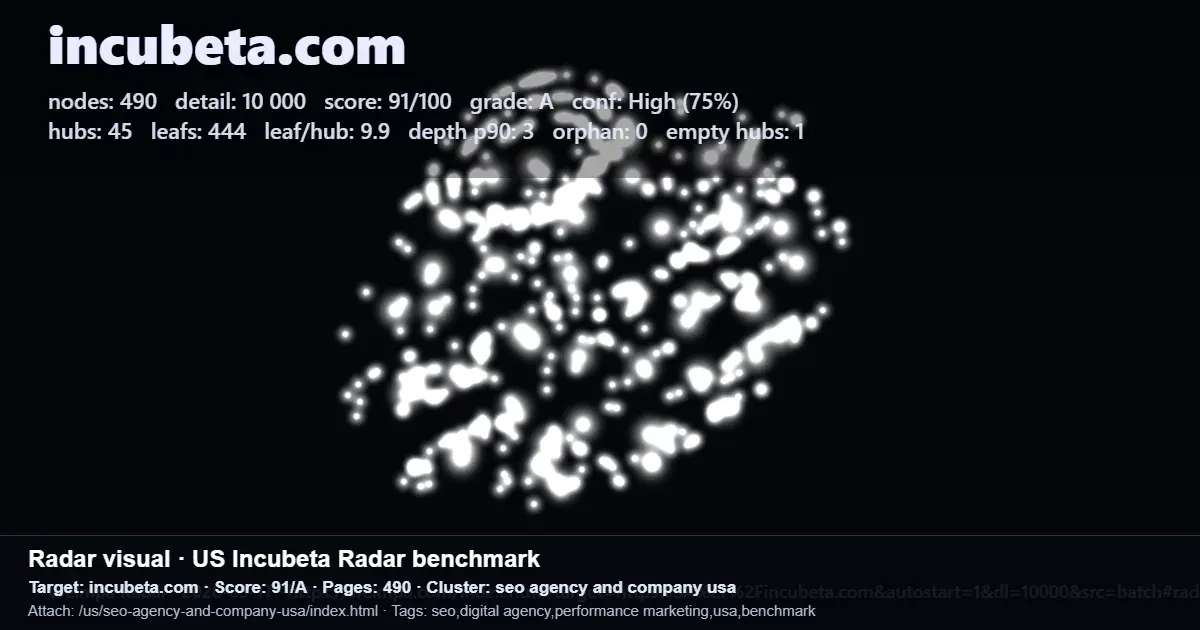
- Radar can summarize large site structures by pages, hubs, leaf pages, weak spots, and scores so teams can compare exposure patterns.
What to do
Start with the structure that already exists. Identify the main hubs, directories, sitemap coverage, and location page groups, then trace whether each important page can be reached through clear internal paths. The audit should focus on real discovery paths, not just the intended architecture.
Compare how different page groups are exposed. Radar benchmark views can summarize large sites by total pages, hubs, leaf pages, and overall score. For a multi-location structure, that view helps show whether important local pages sit inside a clear hub-and-leaf model.
Turn the findings into a practical list of architecture fixes. Depending on the site, this may mean improving hub-to-location links, clarifying provider or specialty relationships, tightening directory paths, or making sitemap exposure more consistent.
What to keep in mind
This audit is most useful when a site has many location, provider, specialty, franchise, or service-area pages under one domain. Complex structures can make it unclear how pages should connect, and some pages may be hard to find for name, specialty, or city searches.
A crawl path audit does not prove that a page will rank or be indexed. It focuses on whether pages are reachable and exposed through the site architecture. Content quality, technical performance, and other SEO checks may still be needed before broader conclusions are made.
The right fix depends on the platform and the existing structure. Some teams need stronger hubs, others need cleaner internal links, better sitemap coverage, or clearer relationships between locations, providers, specialties, and directories.