
Fintech seo structure audit
What this page covers
Fintech seo structure audit
A fintech SEO structure audit reviews how a public website is organized for discovery in Google and AI-powered search, including hubs, leaf pages, internal paths, and access signals.
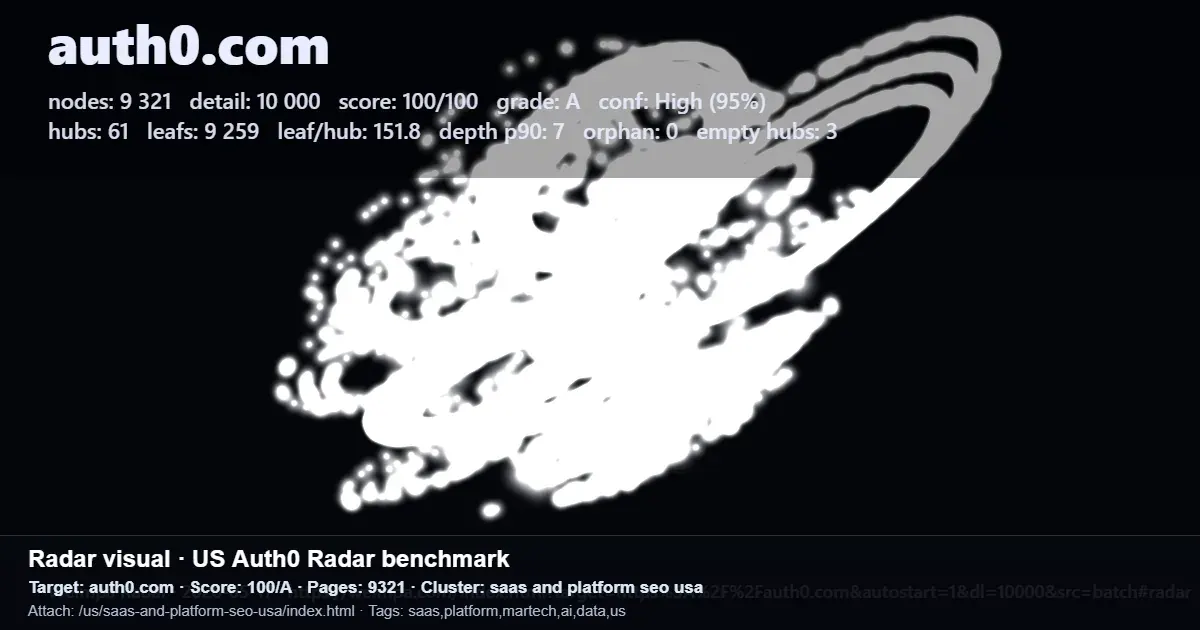
Radar is the first step. It maps the public site structure, shows which pages and hubs are visible, flags weak or blocked discovery paths, and helps prioritize what to fix first.
In brief
- Use the audit to see whether fintech pages sit inside a clear hub and leaf structure instead of existing as isolated URLs with weak discovery paths.
- Check sitemap, robots, home access, internal links, and visible page groups so the team can see which parts of the public site are easy or hard to find.
- Treat the output as a practical structure diagnostic for US growth, SEO, and marketing teams that need qualified inbound demand from search.
What to do
SEO/GEO Community US helps US growth teams, CMOs, SEO leads, agencies, SaaS companies, marketplaces, franchise networks, fintech teams, and other businesses that need inbound demand from Google and AI-powered search.
A Radar scan turns a public website into a structure view: pages, hubs, leaves, weak spots, sitemap and robots signals, home access checks, a readiness score, and practical next steps. This helps teams move beyond a flat URL list and see how the site is actually organized for discovery.
When Radar finds a structural gap, 1000&1 Pages can help build the missing search layer through US demand mapping, hub and leaf page planning, evidence-backed Q&A pages, internal linking, deployment, sitemap submission, and growth monitoring.
What to keep in mind
Radar works with public website access. It does not bypass access controls, paywalls, logins, or anti-bot protections, so private areas and restricted environments are not part of a normal crawl. If crawling is blocked, JSON import can be used when the team provides its own snapshot.
The audit is most useful when a fintech team already has a public marketing, product, resource, or documentation layer and needs to understand how that layer is structured for search discovery. It can show visible hubs and leaves, weak spots, and access issues, but it is not a ranking guarantee.
For the US market, the broader approach focuses on high-intent search demand across states, cities, metros, industries, buyer roles, and business scenarios. The goal is not more generic content. The goal is a measurable inbound layer that answers real questions and supports qualified conversations.