
Ai search visibility for b2b saas
What this page covers
AI search visibility for B2B SaaS
For B2B SaaS teams, AI search visibility is not about publishing more generic content. It depends on clear site structure, focused hubs, and pages that answer real buyer questions.
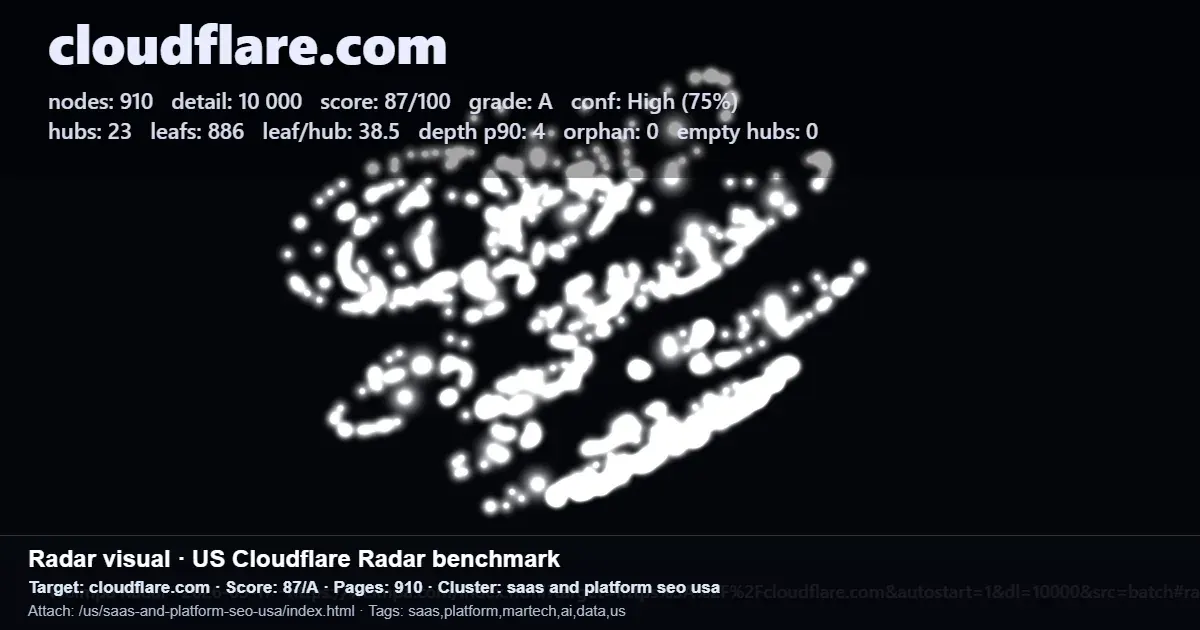
SEO/GEO Community US starts with a Radar scan to show how your public site is structured, which pages and hubs are visible, where discovery is blocked, and what to fix first.
In brief
- AI search visibility for B2B SaaS means making product, use case, role, and industry pages easier for Google and AI-powered search systems to crawl, index, and understand.
- The priority is a measurable inbound layer, not more generic content: pages that answer real buyer questions and support qualified sales conversations.
- A Radar scan helps find visible hubs, blocked discovery paths, internal linking gaps, sitemap issues, and the first structural fixes to prioritize.
What to do
The first step is diagnostic. Radar reviews the public structure of a B2B SaaS website and shows which pages and hubs are visible, where discovery is blocked, and what should be fixed first. This helps teams move from assumptions about AI search visibility to a clearer view of crawlable structure, page coverage, and search-layer gaps.
When the scan reveals a structural gap, 1000&1 Pages helps build the missing search layer. That can include US demand mapping, hub and leaf page planning, evidence-backed Q&A pages, internal linking, deployment, sitemap submission, and growth monitoring for high-intent demand across industries, buyer roles, and business scenarios.
Technical readiness still matters. Modern audits balance classic SEO health checks with readiness for newer search features by focusing on clarity, structure, and authoritative signals. Clear headings, valid structured data, and crawlable, indexable pages can improve visibility opportunities, but they do not guarantee placement in an AI answer card.
What to keep in mind
AI search visibility for B2B SaaS should be treated as an audit and architecture problem, not a guaranteed placement service. Search and AI-powered results depend on external systems, so the practical goal is to improve clarity, structure, crawlability, and demand coverage rather than promise inclusion in specific answer cards.
This approach fits SaaS teams that need qualified inbound demand and can invest in structured pages for specific buyer questions. It is especially relevant when the current site has weak visibility for use cases, workflows, industries, or roles, or when teams lack a clear view of which pages are indexed and performing.
The work is different from simply producing more pages. Start with Radar to understand the current site structure, then plan the hubs, leaf pages, Q&A pages, and internal links that match high-intent US search demand and support buying committees.