
Ai search visibility audit for b2b website
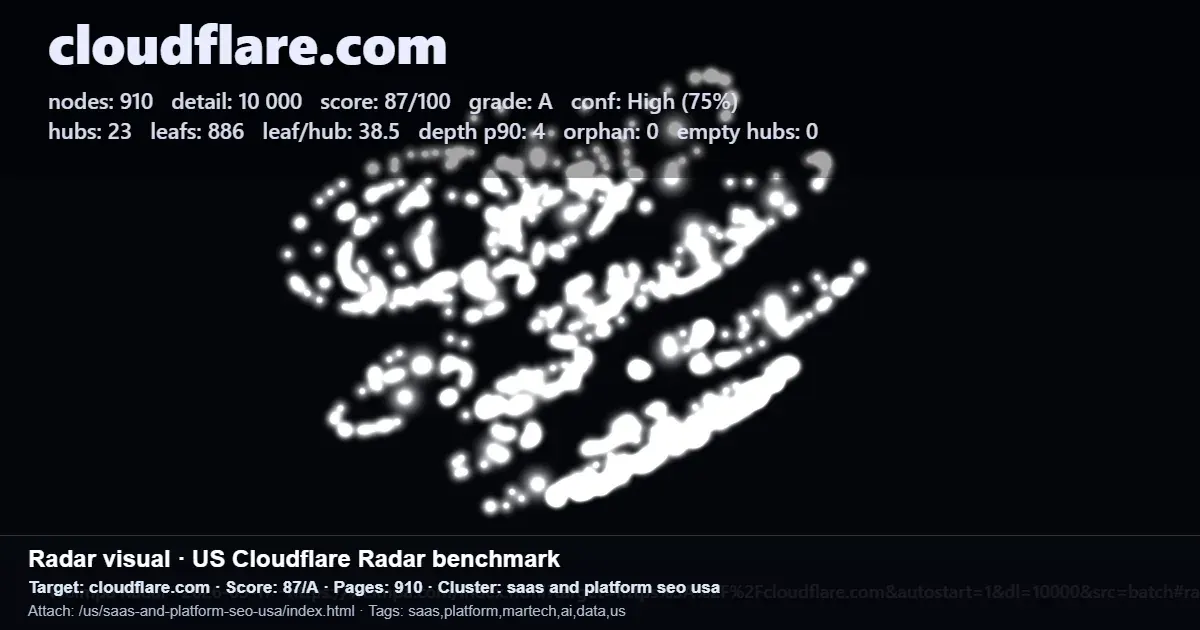
What this page covers
Ai search visibility audit for b2b website
An AI search visibility audit for a B2B website checks whether search engines and AI-powered tools can find, render, and understand your most important pages.
It looks for technical and content issues that can hide key information from crawlers, including JavaScript rendering gaps, blocked pages, weak structure, and missing structured data.
In brief
- Use an AI search visibility audit when standard SEO reports feel too tactical and do not explain why important B2B pages are hard to find or understand.
- The audit should review crawlability, indexing signals, page structure, JavaScript rendering, structured data, and how hubs and pages connect across the site.
- No audit can guarantee inclusion in an AI answer, but clearer headings, valid structured data, and stronger technical foundations can improve readiness for modern search.
What to do
A practical audit starts by checking whether search engines and AI-powered tools can access the content that matters. It should identify pages blocked by robots.txt or meta tags, confirm that error pages return proper 404 statuses, and verify that visible content is also available to crawlers.
The next layer is site architecture and page-level structure. Crawling sitemaps and internal links can reveal orphan pages and broken links, while page checks can flag missing titles, missing or duplicate headings, duplicate URLs, weak image alt text, mobile layout issues, and page load problems.
For AI search visibility, the audit should also evaluate how clearly each page communicates meaning. Clear headings, structured data, and a well-organized hub and leaf architecture can make content easier for machines to extract and interpret while still supporting classic SEO health.
What to keep in mind
An AI search visibility audit is a diagnostic, not a ranking guarantee. Even pages with clean structure and valid structured data are still affected by search engine systems, category competition, and how AI-powered search tools choose to summarize results.
This audit is especially useful for B2B sites where qualified inbound leads from Google and AI-powered search are lower than expected, or where teams are unsure whether the issue is content quality, technical structure, crawlability, or demand coverage.
It may be less useful if the site is very small or if the team is not ready to act on technical and structural recommendations. The strongest use case is turning audit findings into clearer pages, better internal architecture, and more searchable buyer workflows.